
Maritime Security: How Port and Vessel Protection Works in the Pacific Northwest
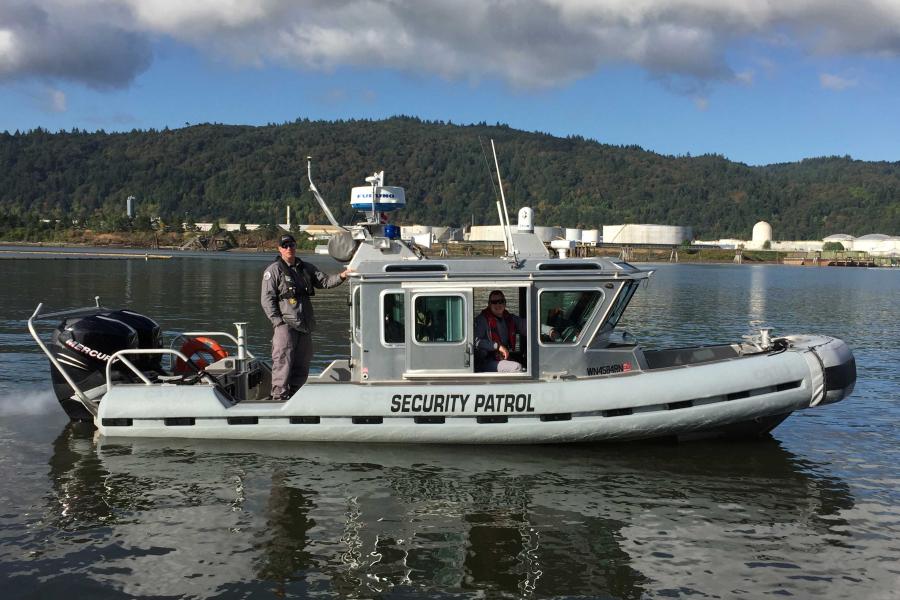
Maritime security protects vessels, piers, terminals, and the people who work them, both on the water and along the shoreside perimeter. It is a specialized field because a working waterfront combines federal regulation, restricted access, and threats that can approach by boat as easily as by gate. In the Pacific Northwest, where ports and shipyards drive much of the regional economy, that protection has to be built for the water, not adapted from a standard guard post.
What Maritime Security Covers
Maritime security spans several jobs that a typical land-based post never touches. Officers control access at terminal gates and along piers, screen credentials, and keep unauthorized people and vehicles out of restricted areas. On the water, waterborne patrols and force protection cover the approaches to a vessel or facility, the angle that fences and cameras cannot. Ports and shipyards also carry a heightened anti-terrorism profile, so security planning accounts for coordinated threats rather than opportunistic theft alone. SSNW has provided maritime security of this kind since 1990.
Why Ports Need Specialized Officers
U.S. ports and vessels operate under federal maritime security rules, and the officers who work them need training that goes beyond standard guard duty. Facility and vessel security plans, controlled access to secure areas, and coordination with the Coast Guard are all part of the environment. An officer has to know the difference between a public terminal and a restricted zone, read the water as well as the dock, and work alongside crews, longshore labor, and federal partners. That is a different skill set from patrolling a retail center, and it is why maritime work sits in its own category.
SSNW's Maritime Track Record
Experience is the part of maritime security you cannot fake, and it shows up in who trusts you with the work. SSNW's waterborne security dates to 1990, and its past maritime clients include the Military Sealift Command, the U.S. Navy, the U.S. Army, the Department of Homeland Security, and major shipbuilders such as Vigor and Westport. For higher-threat assignments, the company fields a dedicated Counter Assault Team trained for force protection rather than routine patrol. That record matters to a port director choosing a provider, because maritime mistakes carry federal consequences.
Securing Washington's Working Waterfronts
Washington's coastline is one long stretch of critical maritime infrastructure. Seattle's container terminals and cruise berths, the naval presence around Bremerton, the shipyards and cargo docks of Tacoma, and the northern ports near Bellingham each present a different security picture. SSNW operates across this region from its Washington base, close enough to respond quickly and familiar with how local ports, tides, and traffic actually work. That regional footing is hard for an out-of-state vendor to match.
Frequently Asked Questions
What does a maritime security officer do?
A maritime security officer protects vessels, piers, and port facilities by controlling access, patrolling on land and water, and responding to threats in a restricted maritime environment. The role blends standard security duties with waterfront-specific tasks like credential screening at terminals and waterborne patrol.
How is maritime security different from regular security guards?
Maritime security operates under federal port and vessel regulations and covers threats that can come from the water, not just the gate. Officers need specialized training, coordination with the Coast Guard, and an understanding of restricted maritime zones that a standard commercial guard post does not require.
Does SSNW provide security beyond the Pacific Northwest?
Yes. While SSNW is based in Washington and works throughout the Pacific Northwest, its maritime assignments have extended nationwide for clients including the Military Sealift Command and the Department of Homeland Security.
Protect Your Waterfront Operation
Protecting a vessel, a terminal, or a shipyard is not a job for a general guard service. If your operation touches the water anywhere in the Pacific Northwest, look at how SSNW approaches maritime security, then call (800) 859-3463 or contact the team online to talk through your facility.